
Quick Verdict
The best Spocket products are those with proven customer relevance, practical shipping, understandable specifications and room for a healthy margin. Categories such as pet accessories, home organization, jewelry and beauty are useful places to research, but no product is a guaranteed bestseller just because it appears in a trending collection.
Affiliate disclosure: This article contains affiliate links. If you sign up through one of them, we may earn a commission at no additional cost to you.
Compare Spocket plans and current offers
Searching the Spocket product catalog can feel like product research, but endlessly scrolling is not the same as choosing products worth selling. If you want a dependable store, use a narrow customer problem as your filter and judge every item by its delivered cost and customer experience.
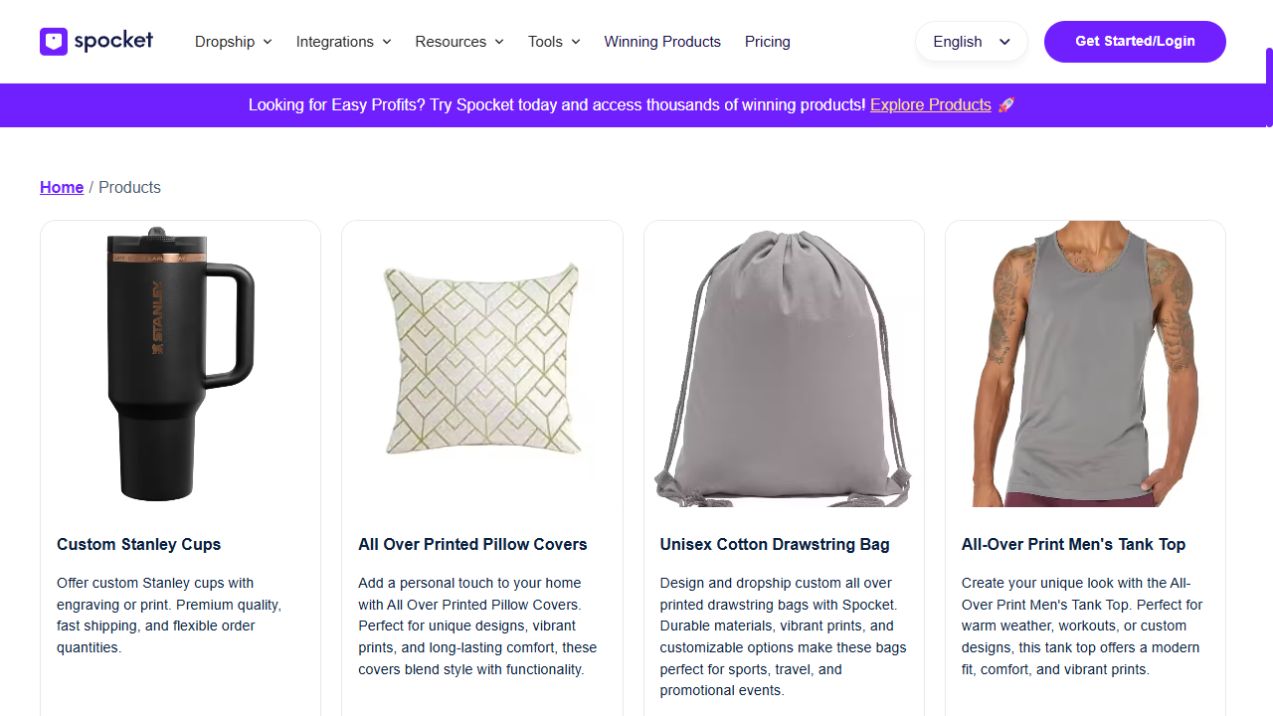
Spocket's catalog includes categories such as pets, home and garden, bath and beauty, clothing, jewelry, toys, gifts and tech accessories. The categories are broad; what matters is finding a few listings within them that you can explain, price, market, and fulfill well.
Seven Spocket product niches worth evaluating
1. Pet accessories
Practical pet products have an audience with clear use cases, from grooming accessories to travel bowls and organization items. The interesting opportunities solve a problem that can be demonstrated in photos or short video. Check materials, sizing, cleaning instructions and safety claims before listing anything customers will use with animals.
2. Home organization
Storage helpers, desk organizers, and small household accessories are easier to explain when they make a cluttered space visibly simpler. They also lend themselves to product demonstrations. The risks are inaccurate dimensions and oversized shipping fees, so confirm measurements and package size before promoting them.
3. Jewelry and fashion accessories
Accessories can support gift-focused campaigns and appealing visuals. Quality, finishes, allergy-related materials and returns matter heavily, however. Generic listings copied from suppliers rarely explain why the piece is worth buying from your store instead of a larger retailer.
4. Beauty tools and accessories
Brushes, organizers and other non-medical beauty accessories may fit a content-led store. Avoid unsupported health or performance claims. Beauty products can be sensitive to labeling, ingredient and safety requirements, so check what your supplier can document before you publish a listing.
5. Tech accessories
Cable organizers, stands, sleeves and simple desk accessories can be more manageable than complex powered electronics. Look for compatibility information, durable construction and clear product photos. Anything involving batteries, chargers or wireless standards needs closer safety and shipping checks.
6. Baby and family accessories
This category can be appealing but has higher expectations around safety and compliance. If you cannot validate product standards and suppliers, choose a less sensitive niche for your first store. Do not repeat vague “safe for babies” claims without supporting product documentation.
7. Seasonal gifts and occasion products
Giftable products can work around holidays, birthdays and personal occasions. The main downside is inventory and delivery timing. An item that arrives after a holiday can create refunds and chargebacks, so build a margin of safety into fulfillment deadlines.
These are research categories, not a list of live verified bestsellers. Use Spocket's product search to validate the actual available listings.
How to find Spocket products worth importing
Start with one audience. Choose an audience that has a distinct problem and a reason to care about the product. Broad “general stores” make it harder to write convincing content.
Filter by destination. A product that ships conveniently to the US might not be a good match for Australia. Use destination filters and verify product details.
Check pricing by variant. A base price shown for the smallest variant may not represent the version customers want.
Review processing plus shipping. Those are separate time periods. Add both together and confirm they apply to the shopper's country.
Inspect the supplier's return policy. Avoid making universal returns promises when the supplier's terms vary.
Order samples. Confirm what you receive matches the listing's description and images.
The product selection scorecard
Use a simple one-to-five score on these factors: customer usefulness, margin after shipping, product clarity, quality confidence, shipping reliability, supplier responsiveness and ease of creating original marketing. Keep your scoring notes outside the storefront, then compare products side by side.
For example, a low-cost gadget with exciting photos may score high on visual appeal but low on actual margin if delivery costs too much. A plain desk organizer with a clear problem, local shipping and a good sample could make a more dependable first product.
How much profit can Spocket products make?
There is no fixed margin across Spocket's catalog. Each supplier sets product pricing and shipping arrangements. Spocket requires supplier discounts as part of its supplier program, but a discount off retail does not guarantee that your own store will be profitable after ads and other operating costs.
Imagine a hypothetical product sold at $55. The supplier charges $24, shipping $6, payment handling $2 and advertising $10. That leaves $13 before subscription allocation, refunds, tax and overhead. The correct decision depends on whether your real store can consistently achieve those numbers.
If you are still picking a subscription, check the Spocket pricing guide so you understand how many unique products your plan can support.
How to import products from Spocket into Shopify
Find a suitable listing and choose Add to Import List. Open Import List and customize the information for your shoppers. Use a readable product title, explain the actual specifications, remove unsupported claims, and verify variant prices before choosing Push to Store.
Spocket's product import instructions describe a product-by-product import process. After pushing the product, review it in your own store editor and preview it on mobile. Check images, variants, shipping, SEO title, description and collection placement.
The detailed Spocket Shopify integration tutorial covers storefront connection and the order workflow.
How to turn a generic listing into a better product page
Start with the buyer's main problem rather than a long list of generic features. Explain how the product is used, who it suits and what should not be expected. Include measurements, materials, care instructions and compatible devices when relevant. Add original sample photos where possible.
Use an FAQ only when it resolves genuine purchasing doubts, such as fit, delivery, assembly or returns. Those concrete details help both searchers and AI-assisted search summaries understand your page. They also reduce customer service questions after an order.
Mistakes to avoid when choosing Spocket items
Do not assume that “trending” means you can profitably sell a product today. Do not list regulated or safety-sensitive products without checking requirements. Avoid creating pages for dozens of nearly identical variants with copied text. Never guarantee domestic two-day shipping simply because the product appears under a US supplier filter.
Finally, do not let the largest product catalog dictate your plan choice. A focused product selection often benefits from a smaller, lower-cost tier while you validate demand.
Frequently asked questions
What products are available on Spocket?
Categories include home and garden, pets, fashion, jewelry, beauty, toys, gifts and technology accessories, among others. Availability depends on suppliers and location.
Are Spocket products cheap?
Prices vary. Compare the delivered cost and margin, not just the supplier's initial product price.
Can I order product samples on Spocket?
Yes, sample ordering is described in the Spocket Help Center. Availability and costs depend on the listing and supplier.
Can I list Spocket products on Amazon or Etsy?
Spocket's guidance lists Amazon among allowed channels while explicitly prohibiting Etsy. Read the latest selling-channel rules before listing anywhere.
Are the “best Spocket products” always the same?
No. Demand, seasonal timing, shipping costs and supplier availability change. A product with good fit for one market can be a poor choice for another.
The Bottom Line
Start with five carefully screened Spocket products rather than fifty random ones. The right niche combines customer demand, clear product specifications, a reliable supplier, manageable shipping, and a margin that survives the real cost of selling online.